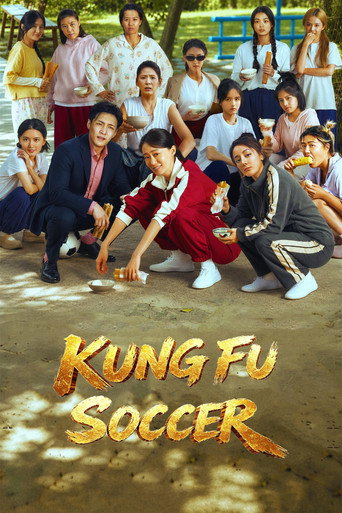
 ActionKung Fu Soccer2026
BBmovies: Chinese-language films, from King of Comedy, You Are the Apple of My Eye and Comrades, Almost a Love Story to Hi, Mom, A Simple Life, Shower and Goodbye Mr. Loser, and where to watch them
190 films from Hong Kong, Taiwan and the mainland, 1963 to 2026, chosen for the whole household.
Recent posts
View all
Popular films
View all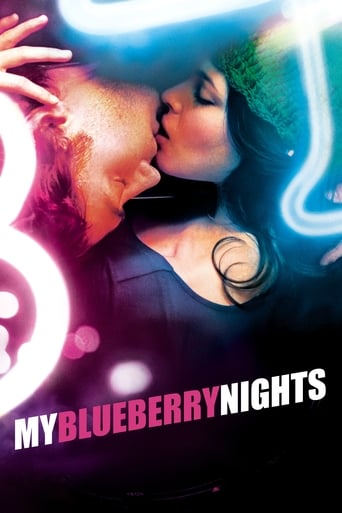 DramaMy Blueberry Nights2007
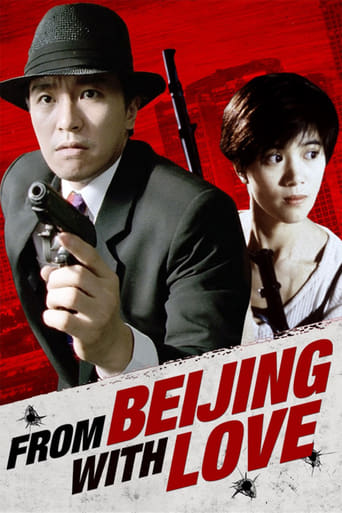 ActionFrom Beijing with Love1994
 RomanceYou Are the Apple of My Eye2011
 ComedyKing of Comedy1999
 DramaReturn to Dust2022
 RomanceCatman2021
 AdventureThe Legend1993
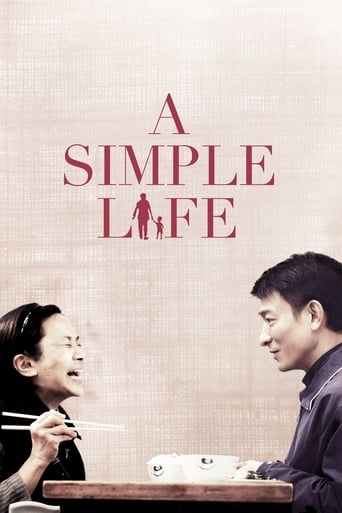 DramaA Simple Life2012
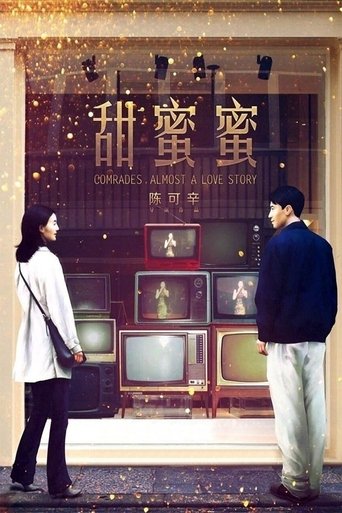 DramaComrades, Almost a Love Story1996
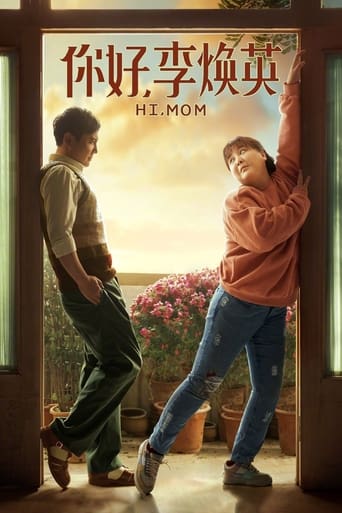 DramaHi, Mom2021
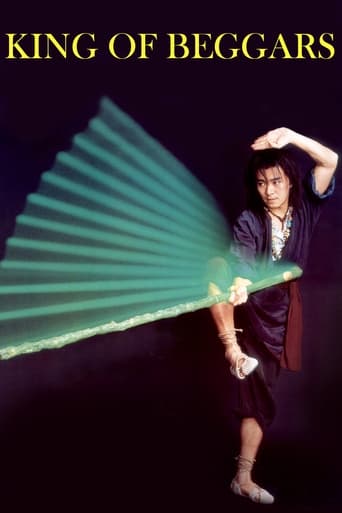 ActionKing of Beggars1992
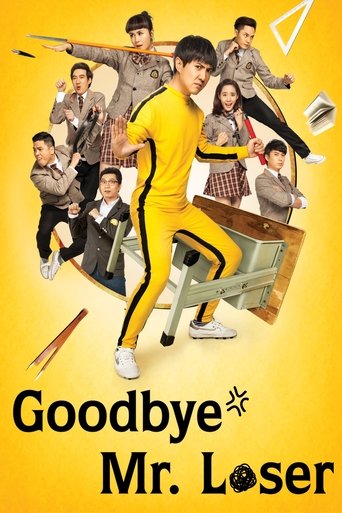 RomanceGoodbye Mr. Loser2015
Comedy
View all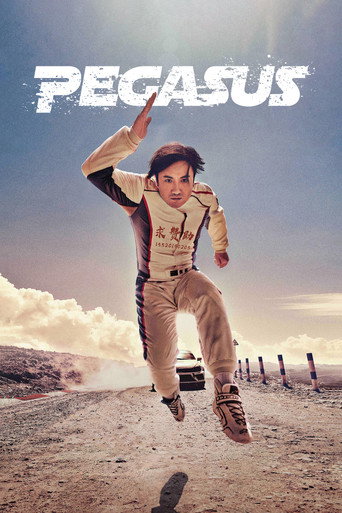
Romance
View all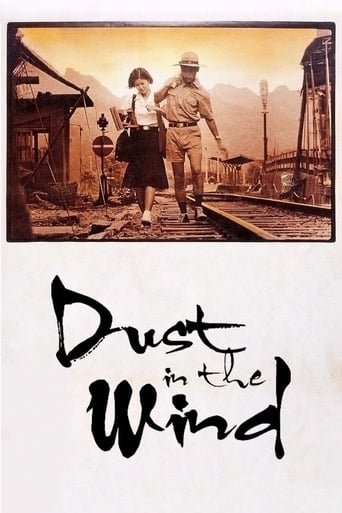

Chinese-language films for the whole household: the BBmovies guide
BBmovies: Chinese-language films, from King of Comedy, You Are the Apple of My Eye and Comrades, Almost a Love Story to Hi, Mom, A Simple Life, Shower and Goodbye Mr. Loser
More people speak Chinese than any other language on earth, and three film industries have grown up in it side by side. Hong Kong, a city of seven million, was for decades the third largest producer of films in the world, and exported its comedies and its kung fu to every continent. Taiwan made quiet, truthful films about growing up that critics placed among the best of their time, and later a run of school romances that all Asia took to heart. The mainland, after a slow start, now has the largest cinema audience anywhere, and its comedies regularly sell more tickets than anything from Hollywood. BBmovies is a guide to 190 films from the three, made between 1963 and 2026. Each has its own page, its story, its director and cast, and a Watch now button that leads to the official services carrying it in your country.
The catalogue has been chosen for the whole household. Every film was read through by hand, and the selection favours comedies, love stories, family dramas, films about school and work, and the gentler classics. Crime thrillers, horror, films of the battlefield and titles made strictly for adults were left out, and so, for the most part, were the straight martial-arts films, which have guides of their own; what remains of the fighting tradition here is its comic side. The result is the Chinese-language cinema that families watch together at the Lunar New Year, that students quote to one another, and that grandparents remember from the picture houses of their youth.
This guide explains how the collection is arranged, visits Hong Kong, Taiwan and the mainland in turn, walks through each label, and ends with a plan for a first month and a short set of questions and answers. Every film named here has a page on BBmovies, and a click on its title opens that page.
How the collection is arranged
The home page is laid out like a film blog. The white header carries the name, the menu and the search box. Below it, on the left, the films appear as posters with their titles laid over the foot of each picture and a small blue label showing the genre: recent posts first, then the most popular films, then comedy and romance. On the right, a white column lists the labels with the number of films under each, and beneath that the highest rated films with their scores. The menu opens the full list of Movies, the three regions, Comedy and the A to Z index.
By place, 84 films have Hong Kong among their producers, 36 Taiwan, and 77 were made on the mainland alone; co-productions, of which there are many since 2004, are counted where they were chiefly made. By kind, 120 are listed as dramas, 105 as comedies and 81 as romances, with a great many belonging to two or three of these at once; 76 concern family life, 38 are set at school or among the young, and 26 turn on music. By period, 20 date from before 1990, 33 from the 1990s, 26 from 2000 to 2009, 44 from 2010 to 2015, 25 from 2016 to 2019 and 42 from 2020 onwards.
A word on language and names. Hong Kong films are made in Cantonese, the speech of the south, while films from Taiwan and the mainland are in Mandarin, the national language; the two are written alike and sound entirely different. Each film page gives the original title in Chinese characters, which is the form to use when searching a service in Hong Kong, Taiwan or Singapore. Chinese personal names are given here in the form most often used in English, family name first for mainland and Taiwanese artists and in the customary English form for those from Hong Kong.
Stephen Chow
Any account of Chinese-language comedy begins with Stephen Chow. He started as the host of a children's television programme, and between 1990 and 2004 he made some fifty films that were, year after year, the biggest hits in Hong Kong. His style has a name in Cantonese that means something like nonsense talk: puns, sudden changes of tone, parodies of other films, and a hero who is usually a boastful, cowardly idler with a decent heart hidden somewhere inside. Twelve of his films are gathered under a label of their own.
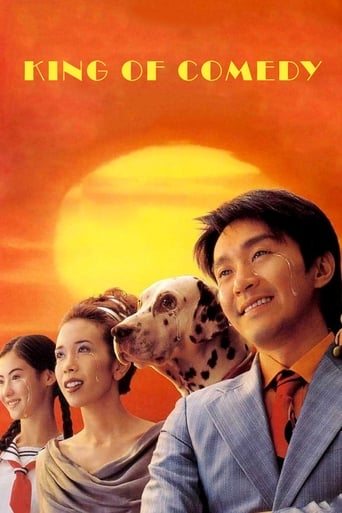
King of Comedy, from 1999, is his most personal film. He plays a man who runs a tiny acting class at a community centre, studies a famous Russian manual on the craft of the actor, and works as an extra on film sets, where he takes each corpse and passer-by with ridiculous seriousness. He meets a young club hostess who needs lessons in how to seem sincere, and the two failures recognise each other. It is very funny and unexpectedly tender, and it is the film that his admirers quote most.
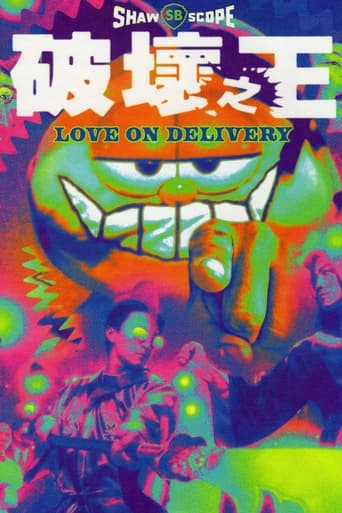
From Beijing with Love is a parody of spy films, with Chow as a pork butcher who is also the least competent secret agent on the mainland, recalled to find a stolen dinosaur skull. Love on Delivery has him as a delivery boy who takes lessons from a fraudulent kung fu master in order to impress a girl. King of Beggars is a costume comedy about the spoilt son of a general who loses everything and rises again as the leader of the beggars' guild. Fist of Fury 1991 sends a country boy with one enormously strong arm to Hong Kong, and Legend of the Dragon turns on a game of snooker.
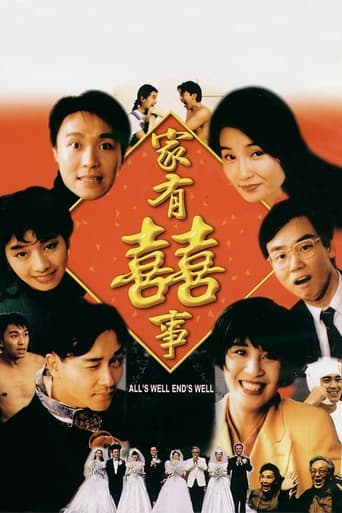
Tricky Brains pairs him with Andy Lau as a professional trickster hired to ruin a rival's life. Lawyer Lawyer is a courtroom farce set in the last years of the empire. All's Well, Ends Well, from 1992, is the model of the Hong Kong New Year film: three brothers, three romances, a great many film parodies and a cast of the biggest stars of the day, all ending in a group wedding. It was so successful that the title became a series, and All's Well End's Well, Too and All's Well, End's Well '97 are here as well. The New King of Comedy, which Chow directed in 2019, returns to the life of the film extra with a young woman as its dogged heroine.
Hong Kong comedy
Chow had a great forerunner. Michael Hui, with his brothers, more or less invented modern Cantonese film comedy in the 1970s, and Chicken and Duck Talk, from 1988, is among his best: he plays the tight-fisted owner of a filthy roast-duck restaurant who wakes up when a gleaming fast-food chicken chain opens across the road. The title is a Cantonese phrase for two people talking past each other, and the film is a hymn to the little family business. It's a Mad, Mad, Mad World is about a family in a public housing estate who win the lottery, and it began another long series.
The New Year film is a Hong Kong institution. Released for the holiday, with a title that sounds like a blessing, it gathers as many stars as possible in a story where every quarrel ends in a reunion dinner. 72 Tenants of Prosperity, Hot Summer Days and Table for Six, in which three brothers share a flat that used to be their parents' roast-meat shop, carry the form into the present. The Lucky Guy and Love Is Love are lighter still.
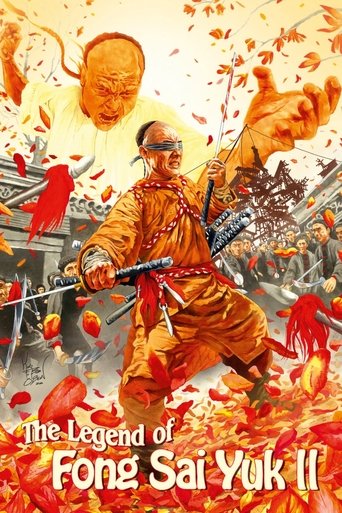
Kung fu comedy is the city's other invention, and 28 films carry that label. The Prodigal Son, made by Sammo Hung in 1981, is about a rich young man who believes he is a great fighter because his father has been paying his opponents to lose, and who joins an opera troupe to learn the real thing; its mixture of clowning and dazzling skill has seldom been matched. The Legend and The Legend II, with Jet Li as the folk hero Fong Sai-yuk and Josephine Siao stealing every scene as his formidable mother, are bright adventures with as many jokes as fights. Shaolin Popey is a children's comedy with two tiny monks. The Iceman Cometh thaws a Ming dynasty guard in modern Hong Kong. Gallants, from 2010, is a loving tribute to the whole tradition, in which the elderly stars of the old kung fu films play elderly disciples waiting for their master to wake from a thirty-year sleep. Kung Fu Chefs, House of Fury, Looking for Jackie, about a boy who sets off to become the pupil of a certain famous star, and Kung Fu League are for younger viewers.
Hong Kong romance and drama
Hong Kong has also made some of the finest love stories and family dramas in Asian cinema. Comrades, Almost a Love Story, directed by Peter Chan in 1996, is the one that everybody names. Two young people arrive from the mainland on the same train in 1986: he is a simple northerner with a fiancée at home, she a quick, ambitious southerner who passes for a local. They become friends, then more than friends, and are parted and thrown together again across ten years and two continents, to the songs of the singer Teresa Teng, whom all Chinese everywhere loved. Maggie Cheung and Leon Lai are perfect, and the film swept the city's awards.
An Autumn's Tale, from 1987, is its ancestor: a student from Hong Kong arrives in New York to find that her boyfriend has moved on, and is looked after by a distant cousin, a rough, kindly waiter with a battered car, played by Chow Yun-fat in one of his most loved roles. C'est La Vie Mon Cheri is the great Hong Kong weepie, about a jazz musician and a girl from a family of street opera singers. Lost and Found, Twelve Nights, which follows a relationship from first night to last, Needing You..., an office romance that set the pattern for a decade of comedies, and Turn Left, Turn Right, in which two lonely people live in adjoining flats and always turn the opposite way at the door, are all favourites. Love in a Puff and Love Off the Cuff follow one very modern couple, who meet in a back alley where office workers gather on their breaks.
The director Ann Hui has three films here, and they are among the best in the catalogue. Song of the Exile is drawn from her own life: a young woman returns from London for her sister's wedding and travels with her mother to the mother's native Japan, where each begins to understand the other. Summer Snow is a comedy-drama about a capable woman of forty who must look after a father-in-law whose memory is failing; its star was named best actress at Berlin. A Simple Life, from 2011, tells the true story of a film producer and the servant who has worked for his family for sixty years, and of how he cares for her at the end as she once cared for him. Deanie Ip won the best actress prize at Venice, and few films about old age are as free of self-pity.
Echoes of the Rainbow is a memory of Hong Kong in 1969, seen through the eyes of the small son of a shoemaker, and won the prize for young audiences at Berlin. Painted Faces recreates the opera school where several future film stars spent their boyhoods under a strict and loving master. All About Ah-Long is a father-and-son drama with Chow Yun-fat as a lorry driver. Still Human is about a man in a wheelchair and the Filipina helper who has dreams of her own, and Zero to Hero is the true story of a Paralympic sprinter and his indomitable mother. Wait 'Til You're Older gives a boy who hates his stepmother a potion that makes him grow up overnight, with consequences he had not foreseen.
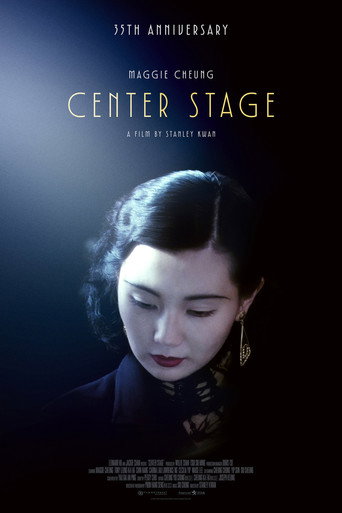
Three films look at the stage and the screen. Center Stage is a portrait of Ruan Lingyu, the great star of the Shanghai silent cinema, in which Maggie Cheung, who was named best actress at Berlin for it, both plays the part and discusses it. The Mad Phoenix is the life of an eccentric genius of Cantonese opera. The Love Eterne, from 1963, is the oldest film here and one of the most successful ever made in Chinese: a sung version of the legend of the butterfly lovers, in which a girl disguises herself as a boy to study and falls in love with a classmate. In Taiwan people saw it dozens of times and knew every song by heart.
Perhaps Love is a lavish musical about a love triangle on a film set, The Way We Dance a cheerful story of student street dancers and a tai chi club, He's a Woman, She's a Man a comedy of the music business, and My Blueberry Nights the one film that Wong Kar-wai made in English, a road film across America.
Taiwan
Thirty-six films come from Taiwan. In the early 1980s a group of young directors there began to make films of a new kind, slow, exact and drawn from their own memories, and the movement they started is one of the glories of world cinema. In Our Time, from 1982, is the collection of four short stories with which it began. Hou Hsiao-hsien, its greatest figure, is here with five films. Cute Girl and The Green, Green Grass of Home are his early popular comedies with pop singers, sunny and charming. The Boys from Fengkuei follows three lads from a fishing island who drift to the city to wait for their military service. A Summer at Grandpa's sends a boy and his small sister to the country while their mother is in hospital, and watches the adult world through their eyes; it is one of the best films ever made about childhood. Dust in the Wind is the story of a boy and girl from a mining village who go to Taipei to work, and of the letter that comes while he is away.
Edward Yang, the movement's other master, made That Day, on the Beach and Taipei Story, cool portraits of a city changing faster than its people. Ang Lee, who would later win Academy Awards, began with Pushing Hands, about an elderly tai chi master from Beijing who goes to live with his son and American daughter-in-law in a New York suburb. Tsai Ming-liang's What Time Is It There? links a watch seller in Taipei and a young woman in Paris. These are films for patient adult viewers, and they repay patience.
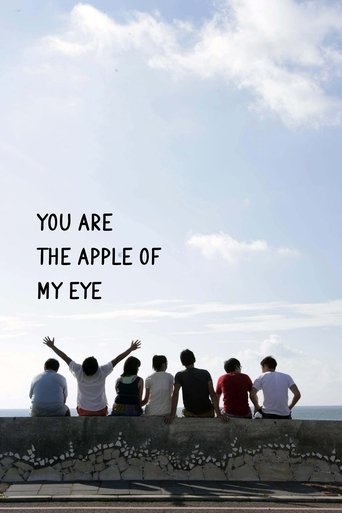
The Taiwan that young audiences across Asia love is of a different kind. You Are the Apple of My Eye, from 2011, was written and directed by a best-selling novelist from his own school days. A mischievous boy is seated in front of the cleverest girl in the class, who is told to keep him in order and prods him in the back with a ballpoint pen each time he slacks; he studies to impress her, and a friendship grows that neither quite knows how to turn into something more. It broke box-office records in Taiwan, Hong Kong and Singapore, and its bittersweet ending is discussed to this day.
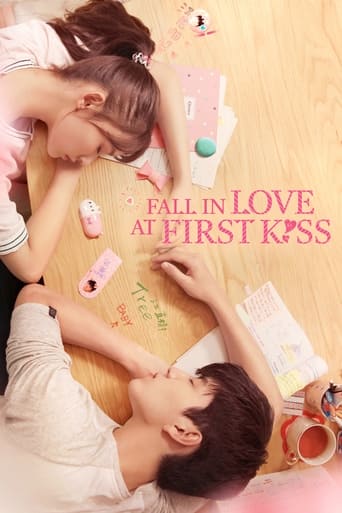
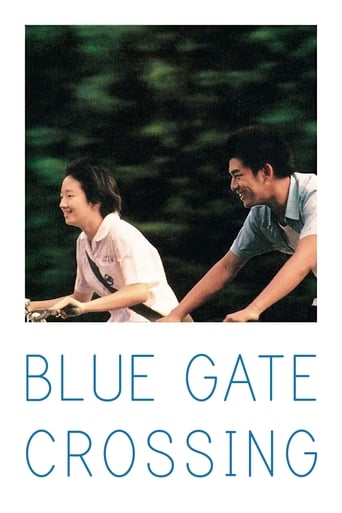
Blue Gate Crossing, nine years earlier, is quieter and just as good: two schoolgirls, a swimmer, a summer of bicycles and secrets. Hear Me is a romance between a delivery boy and a girl he takes to be deaf, played out largely in sign language. Café. Waiting. Love, At Cafe 6, Fall in Love at First Kiss and More Than Blue follow the same tradition, and My Missing Valentine, a comedy about a post-office clerk who is always a beat too fast and a bus driver who is always a beat too slow, won the island's top film awards.
Taiwanese cinema has a strong feeling for ordinary life. Zone Pro Site: The Moveable Feast is a riotous comedy about the outdoor banquet chefs of the south. Touch of the Light is the true story of a blind pianist from the countryside, who plays himself, and a girl who wants to dance. Jump Ashin! is about a gymnast, Taipei Exchanges about two sisters who open a café where goods are bartered, and Parking about a man whose car is boxed in on Mother's Day and meets the whole neighbourhood while he waits. Starry Starry Night is a lovely fantasy for older children, from a famous picture book. Old Fox, American Girl and Classmates Minus are recent films that were honoured at home, and 20 30 40, directed by Sylvia Chang, follows three women at three ages.
The mainland
Seventy-seven films were made on the mainland. The oldest, Teahouse, from 1982, films the celebrated play by Lao She: one Beijing teahouse, its owner and its customers across fifty years of upheaval, performed by the company that made it famous. The Black Cannon Incident is a sharp comedy of 1985 about an engineer who sends a telegram about a missing chess piece and is taken for something far more suspicious. The Spring Festival and Back to Back, Face to Face are humane comedies of family and office life by Huang Jianzhong and Huang Jianxin.
The end of the 1990s brought a group of small, warm films that travelled widely. Shower, by Zhang Yang, is set in a traditional bathhouse in a Beijing lane, where an old man and his younger son, who has a mental disability, look after a clientele of pensioners, cricket fanciers and quarrelling couples; the elder son, a businessman from the south, comes home and learns what the place is worth. Postmen in the Mountains follows a retiring postman and the son who will take over his route on a last three-day walk through the hills of Hunan, and it ran in one Tokyo cinema for more than a year. Happy Times, by Zhang Yimou, is a comedy about a retired worker and his friends who build a pretend massage room in a disused factory to give a blind girl a job. Together, by Chen Kaige, takes a boy violinist and his devoted, uneducated father from a river town to Beijing.
Mainland comedy
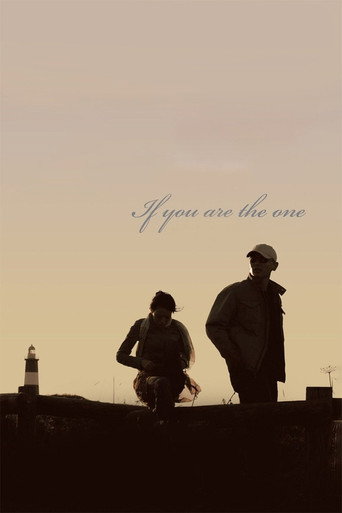
The modern mainland comedy began with Feng Xiaogang, who made a film for every New Year from 1997. The Dream Factory was the first: four out-of-work friends set up a company that lets customers live out a dream for a day, whether to be a general, a film star or a man who can keep a secret. Be There or Be Square is a romance between two Beijingers adrift in Los Angeles. If You Are the One sends a middle-aged inventor, newly rich, on a series of disastrous dates until he meets an air hostess who is as unhappy as he is; they travel to northern Japan, and the film made that island a favourite destination. If You Are the One 2 continues their story, and Personal Tailor returns to the idea of wishes granted for a fee.
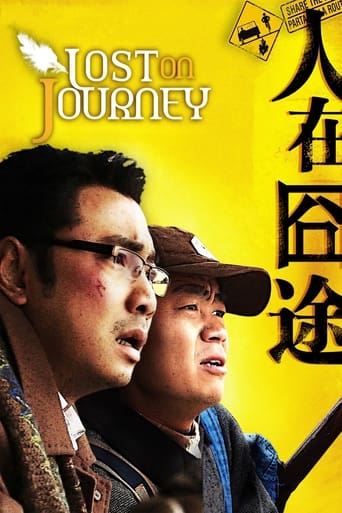
Lost on Journey, from 2010, started another line. A short-tempered toy company boss trying to get home for the New Year holiday is thrown together with a cheerful migrant worker who is carrying a huge bundle and is taking his first flight; planes, trains, buses and tractors fail them one after another. The pairing of Xu Zheng and Wang Baoqiang was so popular that it was repeated abroad, and Lost in Russia, on the long train to Moscow with the hero's mother, belongs to the same family. Breakup Buddies sends two friends on a road trip to the far south-west.
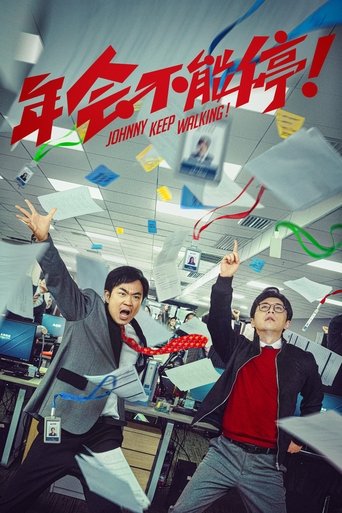
Goodbye Mr. Loser was the surprise hit of 2015. A failed musician makes a fool of himself at the wedding of the girl he adored at school, falls asleep in the lavatory, and wakes up back in his classroom in 1997 with all his memory of the pop songs that have yet to be written. The troupe that made it, which began on the Beijing stage, went on to Hello, Mrs. Money and many more. Pegasus, by the novelist and racing driver Han Han, is about a rally champion who lost everything and must start again with a borrowed car, and his earlier The Continent is a wry road film. Johnny Keep Walking! is a satire of office life in which a factory fitter is promoted to head office by a clerical error, and Successor has two secret millionaires bring up their son in pretended poverty.
Hi, Mom is the mainland's most successful comedy of all. Jia Ling, a well loved comedian, wrote and directed it in memory of her own mother. A young woman who feels she has been a disappointment is carried back to 1981, meets her mother as a lively factory worker of twenty, and sets about making her happy by arranging a better marriage, even if it means that she herself will fail to be born. The first hour is broad and very funny; the last ten minutes turn the whole film round, and audiences across China left the cinema in tears and telephoned home.
Family films
Seventy-six films are listed under Family. Ocean Heaven gave the action star Jet Li his first purely dramatic role, as an aquarium worker who learns that he is ill and must teach his autistic son, a young man of twenty-one who swims like a fish, how to manage alone. It is restrained and deeply felt. Little Red Flowers watches the daily life of a Beijing kindergarten in 1949 through the eyes of a small rebel of four. Einstein and Einstein is about a clever girl of thirteen and the dog her grandfather gave her. The Nightingale sends a grandfather and his city granddaughter, glued to her tablet, on a walk to his native village in the mountains of Guangxi with a caged bird.
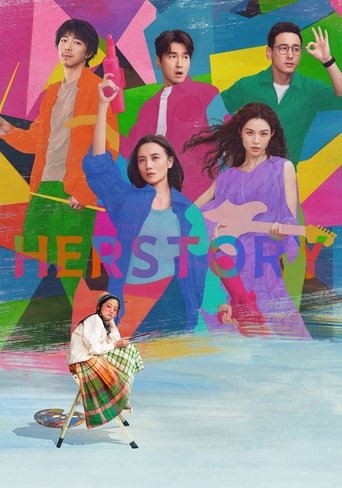
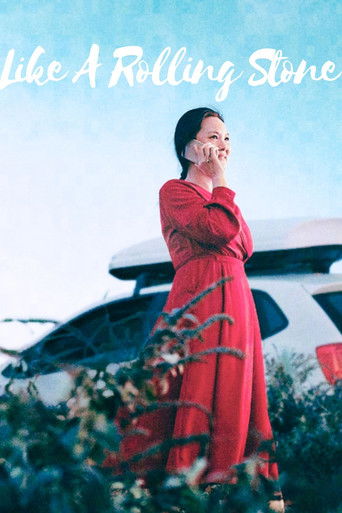
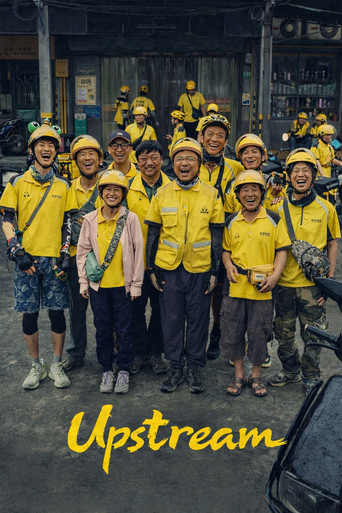
Lighting Up the Stars is a recent favourite, about a gruff young undertaker in Wuhan and the small girl who attaches herself to him. Like A Rolling Stone tells the true story of a woman of fifty who drove away from her family to see the country alone. Viva La Vida is a romance between two young people living with serious illness, played with humour. Upstream follows a middle-aged programmer who loses his job and becomes a delivery rider. Her Story, a comedy about a single mother, her small daughter and their new neighbour, was the most talked-about film of its year.
For younger children there are The Secret of the Magic Gourd, a fantasy made with an American studio about a boy who fishes up a gourd that grants wishes, and The Dragon Pearl, an adventure in which two children on an archaeological dig find a real dragon. Starry Starry Night, Shaolin Popey and Looking for Jackie suit the same age, and Echoes of the Rainbow, A Summer at Grandpa's and Together are fine films to watch with children of ten and over.
School and youth
Thirty-eight films are set at school or among the young, and nostalgia for one's student days is perhaps the strongest current in recent Chinese-language cinema. You Are the Apple of My Eye began it. On the mainland, So Young, the first film directed by the actress Zhao Wei, follows a group of university classmates of the 1990s into adult life, and American Dreams in China tells the story, based on real events, of three friends at a Beijing university who found an English-language school that grows into an empire. My Old Classmate and Upcoming Summer are about deskmates. SoulMate traces the friendship of two girls from thirteen to thirty, and won its two stars a shared best actress award.
Our Shining Days is a high-spirited comedy set at a music academy, where the students of Chinese traditional instruments, looked down on by the orchestra of Western ones, form a band to prove a point. City of Rock gathers an unlikely group to save a rock monument in a provincial town. Suddenly Seventeen gives a woman of twenty-eight a box of chocolates that turn her, for five hours at a time, into her fearless younger self, and 20 Once Again does something similar for a grandmother of seventy.
Music
Twenty-six films turn on music. Together and The Love Eterne have been described. Song of the Phoenix was the last film of Wu Tianming, the teacher of a whole generation of mainland directors: a boy is apprenticed to a master of the suona, the piercing reed horn played at village weddings and funerals, and grows up to find that the old music is losing its place. The Piano in a Factory is a comedy with a heart of steel: a laid-off worker in the north-east, whose wife is leaving and whose daughter loves to play, persuades his old workmates to build her a piano from scrap in their abandoned foundry.
Forever Enthralled is Chen Kaige's life of Mei Lanfang, the greatest of all Peking opera performers. Perhaps Love, The Way We Dance, Touch of the Light and Our Shining Days belong here too, and the songs of Comrades, Almost a Love Story and Goodbye Mr. Loser are as important to those films as their stories.
Quiet dramas
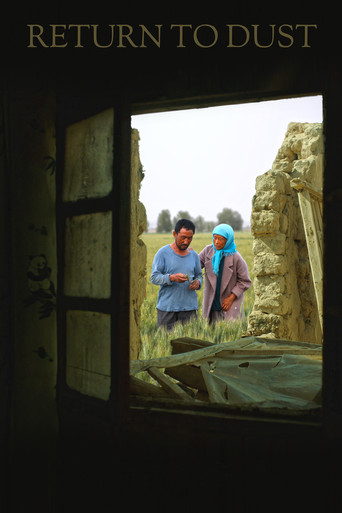
A number of the dramas are films of landscape and patience, for viewers who like to be given time. Return to Dust is the story of two people whom their families consider burdens, a silent farmer and a woman in poor health, who are married off to each other in a village in the north-west and build, brick by brick and season by season, a house and a deep affection. It was shown in competition at Berlin and became a word-of-mouth success at home. Dwelling in the Fuchun Mountains follows four brothers and their mother through a year in a river town near Hangzhou, in long takes that unroll like the famous scroll painting from which it takes its name.
Eighteen Springs, from a novel by Eileen Chang, is a romance of 1930s Shanghai in which a single misfortune separates two lovers for half a lifetime. July Rhapsody is about a schoolteacher of forty and his wife. Gone with the Light, Love Education, in which three generations of women quarrel over where a grandfather should be buried, and Ilo Ilo, a Singapore film about a boy and the family's Filipina helper during a financial crisis, which won the prize for first films at Cannes, are of the same temper.
Films for the New Year
The Lunar New Year is the great family holiday of the Chinese world, and going to the cinema together during it is as much a custom as the reunion dinner. The films made for the season share a shape. They have many stars and several stories. They are full of wishes for luck and prosperity, some of them built into the titles. And they end with everyone at one table. On BBmovies the Hong Kong tradition is represented by the All's Well films, It's a Mad, Mad, Mad World, 72 Tenants of Prosperity, Hot Summer Days and Table for Six; the mainland tradition by Feng Xiaogang's comedies, Lost on Journey, Lost in Russia and Hi, Mom, all of which were released for the holiday.
A household that would like to keep the custom, wherever it lives, could do worse than to choose one of these each year. The Spring Festival, from 1991, shows the holiday itself: an old couple in a northern village prepare the feast and wait for their grown children to come home, each bringing a private worry along with the presents.
Cities on screen
These films are also a tour of places, and it is one of their pleasures to watch the same cities change from decade to decade. Hong Kong appears first as the crowded tenements and hillside squatter villages of Echoes of the Rainbow and Painted Faces, then as the neon city of the 1980s and 1990s in Chicken and Duck Talk, All's Well, Ends Well and Comrades, Almost a Love Story, where the cash machine and the fast-food counter are signs of a new prosperity, and at last as the dense, vertical, slightly weary city of Love in a Puff, My Prince Edward and Table for Six. The trams, the ferries and the tea restaurants with their milk tea and pineapple buns are in almost every film.
Taipei can be followed in the same way, from the motorbikes and Japanese-era houses of Taipei Story to the cafés and convenience stores of Taipei Exchanges and Café. Waiting. Love. The countryside of the island, with its rice fields, small railway stations and temple squares, is the setting of A Summer at Grandpa's, Dust in the Wind and Zone Pro Site: The Moveable Feast, and the school corridors of the central towns are the whole world of You Are the Apple of My Eye.
The mainland films range more widely still. Beijing is the city of lanes and courtyards in Shower and Teahouse, and of ring roads and office towers in If You Are the One and Her Story. The old industrial north-east, with its silent factories, is the setting of The Piano in a Factory. Postmen in the Mountains and The Nightingale go to the green hills of the south, Return to Dust to the dry farmland of Gansu, Dwelling in the Fuchun Mountains to the river country near Hangzhou, and Lost on Journey crosses half the country in the worst week of the year for travel.
Several films follow Chinese people abroad: to New York in An Autumn's Tale and Pushing Hands, to Los Angeles in Be There or Be Square, to Seattle and Macau in Finding Mr. Right 2, to Paris in What Time Is It There? and to the long railway across Siberia in Lost in Russia. Wherever they go, the questions are the same ones that run through the whole collection: what is owed to parents, what is hoped for children, and how to be at home in a place that keeps changing.
Faces to follow
A good way to explore is to follow an actor. Maggie Cheung, the most admired actress of Hong Kong cinema, is at her finest in Comrades, Almost a Love Story, Center Stage and Song of the Exile. Chow Yun-fat, known abroad for gunfights, shows his gift for warmth and comedy in An Autumn's Tale and All About Ah-Long. Andy Lau, who has made more than a hundred and fifty films, appears in Tricky Brains, Needing You..., A Simple Life and, as a film star playing a version of himself, in the recent satire The Movie Emperor. Sammi Cheng, his partner in several romantic comedies, shares Needing You... with him.
From the mainland, Ge You, bald, deadpan and beloved, is the hero of the Feng Xiaogang comedies. Xu Zheng has directed and starred in the Lost films. Shen Teng, the star of Goodbye Mr. Loser and Pegasus, is the most popular comic actor in China today. Zhou Dongyu, one of the two friends in SoulMate, is the leading actress of her generation. From Taiwan, Gwei Lun-mei made her first appearance in Blue Gate Crossing and returned in Taipei Exchanges, and Sylvia Chang, actress, writer and director, appears across four decades, from That Day, on the Beach to Love Education.
Among directors, Ann Hui, Hou Hsiao-hsien, Edward Yang and Feng Xiaogang have been mentioned. Peter Chan made both Comrades, Almost a Love Story and Perhaps Love, and directed the volleyball film Leap, about the national women's team across forty years. Johnnie To, famous for other kinds of film, shows his light side in Needing You..., Turn Left, Turn Right and the musical Office. Pang Ho-cheung has his pair of modern romances, and Zhang Yang his bathhouse.
Using BBmovies
The site keeps the look of the film blog it is named for: a white header, a blue accent, and posters with the titles written across the foot of each picture. The menu opens Movies, the full list; Hong Kong, Taiwan and Mainland; Comedy; the A to Z index; and My List. The Labels box in the right-hand column of the home page opens every other list, with the number of films in each. Type a title in the search box and matches appear as you type; original titles in Chinese characters are recognised as well as English ones.
Every film has a page of its own. At the top are the poster, the title in English and in Chinese, the year, the running time and the genres. Below come the story, the director and the leading actors. The Watch now button sits beside the poster. Choose your country from the list, press the button, and JustWatch opens with the services that carry that film where you live: subscription services, shops for rental and purchase, and free services supported by advertising. Hong Kong, Taiwan and Singapore are in the list of countries, and a good many of the older Hong Kong films have been restored in recent years and placed on international services with new subtitles.
My List holds the films you have marked for another day. Each film page has an Add to My List button, which notes the title in the browser you are reading with; the My List link in the menu shows your notes, and a button there writes them to a small file to take to another device. The notes are private, and there is neither an account to open nor a password to choose.
Watching with subtitles
Almost all of these films are offered with English subtitles on international services. A few suggestions may make first viewings easier. Cantonese comedy is fast and full of wordplay, some of which is beyond any subtitle; the films of Stephen Chow are best begun with King of Comedy or Love on Delivery, where the jokes are in the situations as much as the words. The Taiwanese school romances and the mainland family films use plain everyday Mandarin, and are a favourite of people learning the language. The classics of the Taiwanese new cinema have very little dialogue and can be followed almost by eye alone.
Many Hong Kong films exist in two versions, one in Cantonese and one dubbed into Mandarin for other markets. Where a service offers both, the Cantonese is the original, and the voices are the actors' own.
A first month
For a newcomer, here is one way to spend four weeks with the collection, two films a week.
In the first week, laugh. King of Comedy shows Hong Kong humour at its warmest, and Lost on Journey is the mainland's best road comedy. Between them they explain why Chinese audiences love the hero who keeps getting things wrong.
In the second week, fall in love. Comrades, Almost a Love Story and You Are the Apple of My Eye are fifteen years and a strait of water apart, and both are about the one who was almost the one.
In the third week, go home. Shower and A Simple Life are about what the young owe to the old, told with humour and with very little fuss. Families with children might add Echoes of the Rainbow.
In the fourth week, watch Hi, Mom together, with handkerchiefs ready, and keep an evening for A Summer at Grandpa's or Dust in the Wind, to see why the cinema of Taiwan is spoken of with such respect.
After that the labels are yours to explore. Top rated holds the 46 films with the highest scores from viewers; the year labels run from 1963 to the present; and the Stephen Chow label is there for the evening when only nonsense will do.
How the films were chosen
Every title on BBmovies was selected by a person and checked by hand. The starting point was the record of feature films in Mandarin and Cantonese held by TMDB with a poster, a still image, a written description and at least twenty ratings from viewers, which gave more than eight hundred candidates. From that list we set aside crime thrillers, horror, films of the battlefield, political chronicles and anything made strictly for adults, together with most of the straight martial-arts films. We then read each remaining description, kept the films that a household could watch together or that an adult could watch with a parent in the room, and looked a second time at any that raised a doubt.
The result has a clear character: 120 dramas, 105 comedies, 81 love stories, 76 family films, 38 stories of school and youth, 28 kung fu comedies and 26 films about music, with many titles counted under more than one heading. Each film appears on BBmovies alone among our sites, so the catalogue is its own. Posters, cast lists and descriptions come from TMDB, and the Watch now links are provided by JustWatch, which records where each film is officially available country by country.
Questions and answers
Questions
What is BBmovies?
BBmovies is a guide to 190 Chinese-language films from Hong Kong, Taiwan and the mainland, made between 1963 and 2026 and chosen for the whole household. Each film page gives the story, year, director and cast, and a Watch now button that leads to the official services carrying the film in your country.
Which film should I watch first?
Start with King of Comedy, You Are the Apple of My Eye or Shower. The first-month plan in the guide suggests an order for eight films.
Is the catalogue suitable for families?
Yes. Every film was screened by hand, and the selection keeps to comedies, love stories, family dramas, school stories and gentle classics. A few classics are best for older teenagers and adults, as the guide explains.
Are the films in Mandarin or Cantonese?
Both. Films from Hong Kong are in Cantonese, and films from Taiwan and the mainland are in Mandarin. Most official services offer English subtitles.
Who is Stephen Chow?
He is the most popular comic actor and director in Hong Kong cinema. Twelve of his films, among them King of Comedy and From Beijing with Love, have a label of their own.
Are there martial-arts films?
Only the comic ones. Twenty-eight kung fu comedies are listed, from The Prodigal Son to Gallants.
How does My List work?
Press Add to My List on any film page. The list is kept by your own browser, free of charge, and the My List link in the menu opens it.
Does BBmovies host films or downloads?
BBmovies is a guide only. Every Watch now button leads to an official, licensed service.